Wednesday, January 30, 2013

Friday, January 25, 2013
U.S. Energy Department Defends Nuclear-Waste Fee to Court
The U.S. Energy Department (DOE) defended its assessment of the $750 million it collects annually from the nuclear-energy industry for waste disposal even as plans for a permanent repository remain uncertain. DOE has submitted the assessment to the U.S. Court of Appeals in Washington, which on June 1 said the agency’s 2010 determination justifying the fee was “legally defective.” It directed the department to re-evaluate whether it collects too little or too much revenue from utilities to dispose of nuclear waste.

The National Association of Regulatory Utility Commissioners, which opposes collection of the fee, said it is still reviewing the department’s filing with the court. The case is National Association of Regulatory Utility Commissioners v. U.S. Department of Energy, 11-1066, U.S. Court of Appeals for the District of Columbia.
The Energy Department has conducted a rigorous review of the adequacy of the Nuclear Waste Fund fee, as directed by the D.C. Circuit, and determined not to propose an adjustment to the fee.

The Nuclear Energy Institute, a Washington-based industry group has protested having to pay the fee without a disposal site being made available.
President Barack Obama’s administration in 2010 ended funding for Yucca Mountain, a proposed repository about 100 miles northwest of Las Vegas, leaving plans for a permanent disposal site uncertain.
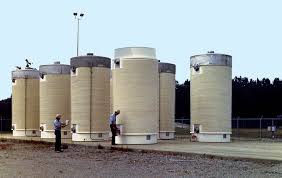
The waste fee is tied to the department’s obligation to take and dispose of nuclear waste, “not the Yucca Mountain project,” the department said in the filing.
President Barack Obama’s administration will work with Congress to implement a strategy for nuclear-waste storage, the agency said in its report. (Bloomberg, 1/18/2013)
The National Association of Regulatory Utility Commissioners, which opposes collection of the fee, said it is still reviewing the department’s filing with the court. The case is National Association of Regulatory Utility Commissioners v. U.S. Department of Energy, 11-1066, U.S. Court of Appeals for the District of Columbia.
The Energy Department has conducted a rigorous review of the adequacy of the Nuclear Waste Fund fee, as directed by the D.C. Circuit, and determined not to propose an adjustment to the fee.
The Nuclear Energy Institute, a Washington-based industry group has protested having to pay the fee without a disposal site being made available.
President Barack Obama’s administration in 2010 ended funding for Yucca Mountain, a proposed repository about 100 miles northwest of Las Vegas, leaving plans for a permanent disposal site uncertain.
Interim Storage
The Energy Department said its endorsement of a plan to develop interim storage facilities before a permanent geologic repository is found -- as recommended by a commission on waste Obama set up after pulling the plug on Yucca -- shows the U.S. is committed to taking the waste from utilities. That justifies the continuation of the fee, according to the department.The waste fee is tied to the department’s obligation to take and dispose of nuclear waste, “not the Yucca Mountain project,” the department said in the filing.
President Barack Obama’s administration will work with Congress to implement a strategy for nuclear-waste storage, the agency said in its report. (Bloomberg, 1/18/2013)
Wednesday, January 23, 2013
Nuclear Uprates
Although construction on a new nuclear plant in the U.S. hasn't occurred since the 1970s, nuclear power has added a total of 6,194 MW (equivalent of 6 large power plants) to the grid via uprates since 1977, according to the Nuclear Regulatory Commission (NRC). Exelon alone added 1,100 MW to its existing nuclear fleet from 1998 to 2008.
Pending applications nationwide reveal that uprates account for a planned 1,475 MW.
And according to the World Nuclear Association, more opportunity exists: some 3,200 MW could be added in the U.S. through 67 projects subject to NRC approval.

Consequently, the reactor is able to produce more thermal energy, driving a turbine generator to produce more megawatts. In order to accomplish this, components such as pipes, valves, pumps, heat exchangers, electrical transformers and generators must be able to accommodate the conditions that would exist at the higher power level.
This often requires replacing components so that systems are capable of handling higher flows.
The NRC is closely involved in power uprates, as licensees must submit an increase in power level and equipment modifications for regulatory approval."The analyses must demonstrate that the proposed new configuration remains safe and that measures continue to be in place to protect the health and safety of the public," the NRC says on its web site.
The design of every U.S. commercial reactor has excess capacity needed to potentially allow for an uprate, which can fall into three categories: measurement uncertainty recapture power uprates, stretch power uprates and extended power uprates.
The first option, measurement uncertainty recapture power uprates, are power increases that are less than 2 percent of the licensed power level. This type of uprate is achieved by implementing enhanced techniques for calculating reactor power involving the use of devices to more precisely measure feedwater flow, which is used to calculate reactor power. More precise measurements can reduce the degree of uncertainty in the power level.
Stretch power uprates are typically between 2 percent and 7 percent of the licensed power level, with the actual increase in power depending on a plant design's specific operating margin. Stretch power uprates usually involve changes to instrumentation settings but do not involve major plant modifications.
Extended power uprates are upgrades that have been approved for increases as high as 20 percent of the licensed power level. Extended power uprates usually require significant modifications to major pieces of non-nuclear equipment, such as high-pressure turbines, condensate pumps and motors, main generators and/or transformers. (Power Engineering, November 2012, DOE-EIA)
Pending applications nationwide reveal that uprates account for a planned 1,475 MW.
And according to the World Nuclear Association, more opportunity exists: some 3,200 MW could be added in the U.S. through 67 projects subject to NRC approval.
Uprates 101
The NRC defines an uprate as a utility refueling a reactor with either slightly more enriched uranium fuel or a higher percentage of new fuel in order to increase the power output of a reactor.Consequently, the reactor is able to produce more thermal energy, driving a turbine generator to produce more megawatts. In order to accomplish this, components such as pipes, valves, pumps, heat exchangers, electrical transformers and generators must be able to accommodate the conditions that would exist at the higher power level.
This often requires replacing components so that systems are capable of handling higher flows.
The NRC is closely involved in power uprates, as licensees must submit an increase in power level and equipment modifications for regulatory approval."The analyses must demonstrate that the proposed new configuration remains safe and that measures continue to be in place to protect the health and safety of the public," the NRC says on its web site.
The design of every U.S. commercial reactor has excess capacity needed to potentially allow for an uprate, which can fall into three categories: measurement uncertainty recapture power uprates, stretch power uprates and extended power uprates.
The first option, measurement uncertainty recapture power uprates, are power increases that are less than 2 percent of the licensed power level. This type of uprate is achieved by implementing enhanced techniques for calculating reactor power involving the use of devices to more precisely measure feedwater flow, which is used to calculate reactor power. More precise measurements can reduce the degree of uncertainty in the power level.
Stretch power uprates are typically between 2 percent and 7 percent of the licensed power level, with the actual increase in power depending on a plant design's specific operating margin. Stretch power uprates usually involve changes to instrumentation settings but do not involve major plant modifications.
Extended power uprates are upgrades that have been approved for increases as high as 20 percent of the licensed power level. Extended power uprates usually require significant modifications to major pieces of non-nuclear equipment, such as high-pressure turbines, condensate pumps and motors, main generators and/or transformers. (Power Engineering, November 2012, DOE-EIA)
Tuesday, January 15, 2013
Nuclear Waste Management Agency Act of 2013
Nuclear Waste Management Agency Act of 2013
(Introduced
in Senate/House)
S./H.R.___________
113th
CONGRESS
1st Session
S./H.R.____________
To amend the Nuclear Waste Policy Act of 1982 (42 U.S.C.
10101) to establish the United States Nuclear Waste Management Agency to manage
all Federal and civilian spent nuclear fuel and high-level radioactive waste
management programs currently under the control of the United States Department
of Energy; to establish and operate low-level radioactive waste receipt, supplementary
segregation, treatment and burial or monitored/retrievable storage facilities on
a fee basis; and to promote spent nuclear fuel reprocessing as a viable
technology to aid in achieving and maintaining our national security and
National Energy Policy goals, and for its potential to significantly reduce the
total volume of radioactive waste designated for disposal in a Federal geologic
repository.
IN THE SENATE OF THE UNITED STATES
April__ (legislative day, APRIL___), 2013
Mr./Ms.____________ introduced the following bill; which was
read twice and referred to the
Committee on Energy and Natural Resources
A BILL
To amend the Nuclear Waste
Policy Act of 1982 (42 U.S.C. 10101) to establish the United States Nuclear
Waste Management Agency to manage all Federal and civilian spent nuclear fuel
and high-level radioactive waste management programs currently under the
control of the United States Department of Energy; to establish and operate
low-level radioactive waste receipt, supplementary segregation, treatment and
burial or monitored/retrievable storage facilities on a fee basis; and to promote
spent nuclear fuel reprocessing as a viable technology to aid in achieving and
maintaining our national security and National Energy Policy goals, and for its
potential to significantly reduce the total volume of radioactive waste
designated for disposal in a Federal geologic repository.
Be
it enacted by the Senate and House of Representatives of the United States of America
SECTION
1. SHORT TITLE; TABLE OF CONTENTS.
(a) SHORT
TITLE- This Act may be cited as the Nuclear Waste Management Agency Act of 2013.
(b) TABLE
OF CONTENTS- The table of contents of this Act is as follows:
Sec. 1. Short title; table of
contents.
Sec. 2. Findings.
Sec. 3. Definitions.
Sec. 4. Purposes and Policies.
SECTION 2. FINDINGS.
The
Congress finds that—
1. The
United States Department of Energy (hereafter referred to as the DOE) has
failed to provide suitable off-site commercial spent nuclear fuel (hereafter referred
to as SNF) disposal to the commercial nuclear utilities per the Nuclear Waste
Policy Amendments Act of 1987; yet to date, nearly $18 billion dollars has been
paid into the Nuclear Waste Fund by the electric utility ratepayers, and the
fund has accumulated a total of nearly $35 billion including interest. Also, the projected date for completion of
the geologic repository by the DOE to begin emplacement of SNF was previously revised
from 2010 to a new projected date of 2017 until the project was deemed no
longer an option for storing SNF and other high-level waste (HLW) in 2009; while
the original congressionally mandated date for having a geologic repository
available was 1998.
2.
There are presently 15 shutdown reactors at 14 sites in
10 states that are storing over 3,600 metric tons of uranium (MTUs) in the form
of SNF in either dry storage casks or spent fuel pools. Also, a total of over 60,000 MTUs of
commercial SNF, in addition to nearly 13,000 MTUs of government-held SNF and
defense-related HLW, is being stored at 121 sites in 39 states.
3. As
of the beginning of Federal fiscal year 2012, beginning in annual year 2007, 18
applications for constructing a total of 27 new reactor units in the United
States had been received by the United States Nuclear Regulatory
Commission. Out of that number, only
five applications for a total of six new reactor unit units have been
suspended, leaving 12 applications for a total of 21 new reactor units to be
reviewed. Out of those 12 applications,
four for a total of four new reactor units are in the Review Complete stage,
and the other eight applications for a total of 16 new reactor units are
currently in the Accepted/Docketed stage.
Further, applications for constructing more new nuclear power plants in
the United States are projected to be submitted during annual year 2012 and
beyond.
4.
The DOE has not addressed the issue of civilian low-level
radioactive waste disposal despite the fact that the Low-Level Radioactive
Waste Policy Act of 1980, as amended in 1985, has not lived up to the original
expectations of the legislation due to the continuing inability of the various
low-level radioactive waste compacts to develop low-level radioactive waste
disposal facilities for use by members of the respective compacts, nor is it
the DOE’s responsibility to do so under existing legislation.
5.
Commercial SNF reprocessing is an acceptable, practical
means of fulfilling the nuclear fuel needs, while concurrently reducing the
need for geologic repository space, in other industrialized nations that rely
to a great degree on nuclear power for their electricity. Despite this fact, reprocessing efforts in
the U.S. U.S.
accepts and condones commercial SNF reprocessing in such countries as France , India ,
Japan , Russia and the United Kingdom
6.
Numerous Government Accountability Office reports have
proven the DOE continues to lack effective program management, and many key
projects managed by the DOE experience cost overruns and are not completed by
the projected dates. The inability of
the DOE to provide SNF disposal services to our commercial nuclear power plants
in a timely manner is causing additional, undue financial hardships on our
nuclear utilities due to the need to license and construct on-site dry storage
cask facilities and/or purchase additional dry storage casks to support
prolonged on-site storage of SNF. The
following are three examples of the additional costs presently borne, or
anticipated to be borne, by the Federal Government due to the DOE’s inability
to provide services to the nuclear power industry in a timely manner, with such
costs to be paid out of the Judgment Fund:
a. The
DOE recently settled a lawsuit by the Exelon Corporation, the nation’s largest nuclear power plant
operator, for $80 million in past costs for
SNF storage. If Yucca Mountain
b. The
U.S. Federal Court of Claims recently awarded nearly $150 million in damages to three Northeast utilities
that sued the Federal Government for the
DOE’s failure to provide timely SNF disposal services; and
c. To date, more than 60 lawsuits have been
filed against the DOE pertaining to the SNF issue, with the total Federal liability
for the prolonged storing of SNF at nuclear power plant sites estimated to be over
$60 billion.
7.
A financially autonomous, Federal corporation model
would be ideally suited to effectively managing our nation’s SNF, high-level
radioactive waste, and low-level radioactive waste. Such a model was proposed by the Nuclear
Waste Strategy Coalition in its analysis publication entitled Redesigning the
U.S. High Level Nuclear Waste Disposal Program For Effective Management,
January 1995. Such a model is also similar
to the Independent Federal Authority discussed by the DOE’s Office of Civilian
Radioactive Waste Management in its publication entitled Alternative Means
of Financing and Managing the Civilian Radioactive Waste Management Program
(DOE/RW-0546), August 2001. Also, a
Federal corporation model would be ideally suited to providing the full array
of radioactive waste management services to government and industry because it would
be the most capable of the models for accurately assessing and meeting demands
for service from a broad base of customers due to its business acumen, it would
be accountable to outside regulators, and it would emphasize efficiency in all
facets of operation.
SECTION 3. DEFINITIONS.
For the
purposes of this Act:
1. The term
`contract holder' means a party to a contract with the Executive Director of
the United States Nuclear Waste Management Agency for the disposal of spent
nuclear fuel or high-level radioactive waste entered into pursuant to section
302(a) of the Nuclear Waste Policy Act of 1982 (42 U.S.C. 10222(a)), as amended
by this Act; and
2. The
terms ‘Secretary’, `Administrator', `civilian nuclear power reactor',
`Commission', `Department', `disposal', `high-level radioactive waste', `Indian
tribe', `repository', `reservation', `spent nuclear fuel', `State', `storage',
`Waste Fund', and `Yucca Mountain site' shall have the meanings given such
terms in section 2 of the Nuclear Waste Policy Act of 1982 (42 U.S.C. 10101),
as amended by this Act.
3. As
previously stated in this legislation the United States Department of Energy is
referred to as the DOE, and OCRWM stands for the DOE’s Office of Civilian
Radioactive Waste Management.
SECTION 4. PURPOSES AND POLICIES.
TITLE 1 -- UNITED STATES NUCLEAR WASTE MANAGEMENT
AGENCY
TITLE 2 --
SUPPORT FOR SPENT NUCLEAR FUEL REPROCESSING
TITLE I—UNITED STATES NUCLEAR WASTE MANAGEMENT AGENCY
SEC. 101. GENERAL PROVISIONS AND PROGRAM SCHEDULES.
(a) IN
GENERAL- Congress shall approve the creation of an autonomous federal agency,
established as a Federal corporation, to manage the Federal SNF and high-level
radioactive waste repository and low-level radioactive waste management programs
currently under the control of the DOE, and to license, construct and operate
civilian low-level radioactive waste receipt, supplementary segregation,
treatment and burial or monitored/retrievable storage facilities on a fee basis. This agency shall be called the United States
Nuclear Waste Management Agency (hereafter referred to as the NWMA). The agency shall be governed by a Board of
Governors, hereafter referred to as the Board, comprised of members selected
from and representing the following organizations: DOE (1 member), Nuclear
Energy Institute (1 member), National Association of Regulatory Utility
Commissioners (1 member), United States Department of the Interior (1 member),
American Nuclear Society (1 member), Health Physics Society (1 member), National
Governors Association (1 member), National Association of State Energy
Officials (1 member), Center for Environment, Commerce & Energy (1 member),
and National Congress of American Indians (1 member). Each Governor shall be appointed by the
President to serve for a period of four years.
The Board, in turn, shall select, with Senate concurrence, an individual
not serving as a member of the Board to serve as the Agency’s chief executive
officer and board chair, with the term of service to be at the pleasure of the
Board. The full title of this position
shall be the Executive Director and Chairman of the Board of Governors of the
NWMA. The Board Chairman shall have full
voting privileges.
(b) RESPONSIBILITIES
OF THE BOARD--(1) The Board shall convene at a minimum of every calendar
quarter, not to exceed a period of 90 consecutive days, and at a Board approved
location within the United
States
(2) The Board shall establish and approve salaries
and bonuses, with such salaries not limited by current Federal executive pay
schedules, for the agency’s executives, with the maximum annual salary,
excluding bonuses, of the Executive Director not to exceed $360,000 per annum
for the first year with annual cost of living increases permitted
thereafter. The annual salary for each
program director immediately below the position of Executive Director shall not
exceed $300,000 for the first year, excluding bonuses, with annual cost of
living increases permitted thereafter.
The Board shall also establish and approve travel and per diem payments
for members of the Board while performing in an official Board capacity;
(3) The Board shall establish and approve agency
policies and procedures consistent with
Federal personnel management policies and regulations and with all
pertinent nuclear industry regulations, including Title 10 of the Code of
Federal Regulations - Energy, Parts 0 to 199; Title 40 of the Code of Federal
Regulations - Environment, Parts 190, 191, 194 and 197; and Title 49 of the
Code of Federal Regulations - Transportation, Parts 171, 172 and 173;
(4) The Board shall establish fees for providing
radioactive waste management and environmental restoration services performed
by the NWMA, and shall approve all activities proposed by the Executive
Director to be necessary to support the pertinent Federal, State and local
government, academic, medical, nuclear power industry and all other public and
private programs desirous of radioactive waste support services, including
low-level radioactive waste supplementary segregation, treatment and burial or
monitored/retrievable storage services.
(c)
RESPONSIBILITIES OF THE EXECUTIVE DIRECTOR--(1) The
Executive Director shall be responsible for the overall operation of the
day-to-day activities of the NMWA, and shall have the authority to establish
desired performance goals and management standards for the NWMA;
(2)
The Executive Director shall, within 120 days of
confirmation, present a DOE assets transition plan and organization chart to
the Board for its approval, with all desired DOE assets to be transferred to
the NWMA in a timely manner commencing 60 days from the date of the Board’s presentation
of its approval to Congress or as otherwise directed by Congress, with the date
of completion of the transfer of all desired assets to be jointly established by
Congress and the President;
(3)
With the realization that knowledgeable, efficient and
enthusiastic employees are the most valuable asset of any organization, the
Executive Director is empowered to devise and implement an effective training
program that will enable all employees to perform their duties safely and
efficiently, and that will encourage employees to excel in their respective
fields of endeavor and their careers; to devise and implement a performance
appraisal program that will ensure fairness, thoroughness and honesty in the
review of each employee’s performance; to devise and implement a promotion
system that ensures fairness based on the strict adherence to Federal merit
promotion principles; to devise and implement a realistic employee awards and
recognition program to recognize employees who are truly deserving of such
recognition; and to devise and implement a program for ensuring accountability
at all levels, especially at the management levels in order to maintain an
optimum degree of professionalism throughout the NWMA;
(4)
The Executive Director shall have the authority to maintain,
modify or cancel any existing contracts with contract holders providing
services on previously owned DOE facilities that have been transferred to the NWMA. Further, the Executive Director shall have
the authority to impose fines against and/or cancel contract payments to
contract holders if their performance does not adhere to acceptable standards
as established by the NWMA, including failing to meet expectations for the
timely and cost effective completion of contracted services;
(5)
The Executive Director shall submit an annual report,
as approved by the Board, to Congress on the status of all pertinent activities
of the NWMA, including projected and actual completion dates of key activities.
(d)
RESPONSIBILITIES OF THE SECRETARY-- (1) upon the
establishment of the NWMA and within a time frame jointly specified by Congress
and the President, the Secretary shall ensure the completion of the transfer to
the NWMA the control of the Yucca Mountain Project, the Waste Isolation Pilot
Plant (hereafter referred to as WIPP), and any other DOE owned facilities
deemed necessary by the Executive Director to enable the NWMA to fulfill its
congressionally mandated activities. The
transfers shall also include DOE staff currently employed at those facilities,
based upon the review of their respective qualifications by, and the approval
of, the Executive Director. Any DOE
employees not transferring to the NWMA will be promptly reassigned by the
Secretary to other duties within the DOE;
(2)
Within the same time frame the Secretary shall transfer
to the NWMA all existing contracts, and all pertinent funds previously
budgeted, to support the projects and facilities that are transferred to the NWMA.
(e)
RESPONSIBILITIES OF CONGRESS -- (1) Congress shall exercise
greater flexibility in the disbursement of the Nuclear Waste Fund (hereafter
referred to as the NWF) to enable the NWMA to meet projected completion dates
on projects intended to be funded by the NWF, as deemed essential by the Board,
and with the approval of Congress;
(2)
Congress shall authorize the NWMA to establish and
collect fees for providing low-level radioactive waste receipt, supplementary segregation,
treatment and burial or monitored/retrievable storage services, performing
environmental restoration services, and other pertinent support activities as
deemed essential by the Board;
(3)
Congress shall authorize the NWMA to construct an
interim, centralized SNF storage facility on or near the Yucca Mountain
Geologic Repository site or on other Federal or Tribal lands, with the
concurrence of the Department of the Interior, with the interim storage
facility to be operational by a date specified by Congress;
(4)
Congress shall authorize the NWMA, upon transfer of the
WIPP site, to commence the licensing activities for commercial low-level
radioactive waste receipt, supplementary segregation, treatment and burial or
monitored/retrievable storage at the WIPP, with the site to be fully licensed,
operational and receiving shipments of low-level radioactive waste consisting
of Classes A, B, C and greater than C, up to and including Highway Route
Controlled Quantities (as defined by U.S. Department of Transportation
regulations), not later that three years from the date of the transfer of the
WIPP site;
(5)
Congress shall authorize the NWMA, with the concurrence
of the Department of the Interior, to select other Federal or Tribal lands to
serve as low-level radioactive waste receipt, supplementary segregation,
treatment and burial or monitored/retrievable storage sites, and to pursue
licensing and construction activities as deemed necessary by the Board.
TITLE II -- SUPPORT FOR SPENT NUCLEAR FUEL
REPROCESSING
SEC. 201. GENERAL PROVISIONS AND PROGRAM SCHEDULES.
(a)
RESPONSIBILITIES OF CONGRESS -- (1) With the
acknowledgement by Congress that SNF is in effect a renewable energy source,
Congress shall authorize the NWMA to pursue the study of SNF reprocessing for
the purposes of significantly reducing the total volume of radioactive waste to
be stored in the Yucca Mountain Geologic Repository, with the emphasis being
placed on determining the most cost effective method(s) while ensuring the
utmost in proliferation-resistant technologies. This activity is essential in
order to ensure sufficient supplies of new nuclear fuel are available to
support the projected growth in our nation’s base load electric generating
capacity for nuclear power plants, especially if SNF reprocessing becomes
inevitable based on dwindling domestic supplies of natural, unprocessed uranium
and the potential for our inability to obtain sufficient supplies of natural,
unprocessed uranium from foreign suppliers due to national security issues or
an increase in the demand for nuclear fuel in the host countries or regions that
may cause the foreign suppliers to significantly reduce the amount of uranium
for export in order to meet their national or regional needs. Further, Congress authorizes the NWMA, to
utilize Federal lands in and around the Yucca Mountain Geologic Repository site
or on other Federal or Tribal lands, with the concurrence of the Department of
the Interior, to license, construct and operate SNF reprocessing facilities,
utilizing proliferation-resistant technologies, if the Federally-owned
facilities are deemed essential to ensuring sufficient supplies of new nuclear
fuel are available to meet and sustain critical national energy demands or other
national security needs, and commercial suppliers are not capable of meeting those
needs;
(2) Since there are conflicting views in the
scientific community regarding the benefits of existing versus advanced SNF
reprocessing technologies for meeting proliferation-resistant standards desired
by the Global Nuclear Energy Partnership, Congress shall allocate annual funds
from sources other than the NWF to be used by the NWMA to develop the safest,
most cost effective method(s) of reprocessing SNF to meet desired proliferation-resistant
standards, with the annual fund allocation amount not to exceed $250 million or
a lesser amount as prescribed by Congress;
(3) Congress shall also authorize the NWMA to
negotiate with commercial suppliers of nuclear fuel to incorporate proliferation-resistant
SNF reprocessing into their nuclear fuel manufacturing process, and to have a
national SNF reprocessing capability in place by a date to be determined by
Congress once such a program is proven to be economically feasible based on
market costs for uranium, with the knowledge that there may be finite global
quantities of natural, unprocessed uranium available to meet increasing demands
for nuclear fuel.
Passed the Senate/House (Date).
Attest:
Secretary.
END
Thursday, January 10, 2013
NRC To Increase Firepower at Nuclear Waste Sites
The Nuclear Regulatory Commission (NRC) is moving forward with plans to outfit security guards protecting spent fuel storage sites at power plants with machine guns and other high-capacity weapons. A supplemental proposed rule to be published in the Federal Register amends a 2011 regulation giving personnel at the sites “an expanded arsenal of weapons, including machine guns and semi-automatic, large capacity, assault weapons.”
Private security at the sites are currently armed, but to a lesser degree. Together, the original proposal and supplement are designed to fend off any attempts at “radiological sabotage” at 65 operating power reactor sites, 53 of which have on-site spent fuel storage areas.
If adopted, the new regulation would be voluntary, and the nation’s nuclear operators would have the option of applying for the added security.
Members of the public and interested parties will have 45 days to comment on the proposal. (The Hill, 1/9/2012)
Maybe the minigun:
Private security at the sites are currently armed, but to a lesser degree. Together, the original proposal and supplement are designed to fend off any attempts at “radiological sabotage” at 65 operating power reactor sites, 53 of which have on-site spent fuel storage areas.
If adopted, the new regulation would be voluntary, and the nation’s nuclear operators would have the option of applying for the added security.
Members of the public and interested parties will have 45 days to comment on the proposal. (The Hill, 1/9/2012)
Maybe the minigun:
Friday, December 28, 2012
Tribe Challenges Nuclear Fuel Storage in Minnesota

 |
| Prairie Island nuclear plant |
Minneapolis-based Xcel, the state's largest utility, stores spent fuel rods in 29 casks next to its power plant. Up to 64 casks ultimately may be needed. The casks likely will remain in Minnesota for decades because the federal government hasn't built a permanent storage site.

Mahowald said the tribe wants the waste moved, either to a permanent facility or to long-term temporary storage elsewhere. The tribe has pursued those goals not only in the Prairie Island relicensing case, but as a participant in the federal lawsuit that forced a review of U.S. storage rules.
The two reactors at Prairie Island supply about 20 percent of the electricity to Xcel's customers in the Minnesota region. The reactors are licensed to operate until 2033 and 2034. (Star Tribune, 12/26/2012)
Virginia Uranium Moratorium Issue 2013

On January 16, 2007 Virginia Uranium was formed, with Walter Coles as chairman and his son, Walter Coles, Jr., as Executive Vice President. Norman Reynolds, who had been president of the predecessor company, Marline, brought his valuable experience to the table as a Director and as President and Chief Executive Officer.
Investor confidence in the company has not lagged, with a total of $39 million being invested in the project since 2007. Much of that has been spent in additional studies of the ore body, as well as in informing Virginians and their legislators of the enormous positive impact the enterprise can have on the state and region as well as on the nation’s energy security.
NFRC supports development of the uranium mine. (Virginia Uranium, Wash Post, 1/27/2012)
Thursday, December 27, 2012
License for Utah Nuclear Waste Site Will Be Withdrawn
 |
| Dry Cask Nuclear Waste Storage |
The NRC granted a license for the facility about seven years ago, but the Bureau of Indian Affairs and the Bureau of Land Management withheld other approvals needed for the project to move forward. Although those decisions were later overturned in court, the proposal faced intense political opposition at all levels of government in Utah. Opponents often cited its close proximity to a large weapons proving ground and bombing range 45 miles from Salt Lake City.
According to the consortium's website, its members included Xcel Energy, Genoa Fuel Tech, American Electric Power, Southern California Edison, Southern Nuclear Company, First Energy, Florida Power and Light, and Entergy. They had planned to build a concrete pad large enough for interim storage of 4,000 dry casks from around the country. They would not be opened, and the waste would not be handled on site.
The Goshutes agreed to lease 820 acres for the project. According to a website maintained by the state of Utah, the tribe has about 130 members, with between 15 and 20 living on the reservation. It is located in Tooele County, which is also home to a low-level waste disposal facility owned by EnergySolutions. (Nuclear Street, 12/27/2012)
Saturday, December 1, 2012
Virginia Uranium Working Group Completes Report

Its report explores what a regulatory framework could look like if the General Assembly were to lift a 30-year moratorium on uranium-mining permits. The report, to the state’s Coal and Energy Commission, offers guidance on monitoring the air and water that would surround a uranium mine as well as the health of miners and residents. Suggestions for staffing agencies that could be involved in overseeing the mine are also included. To cover the cost of regulation, the group recommends permitting and licensing fees and a possible tax on the mining companies.
The report does not advocate for or against the issue or compel lawmakers to take action — the group was not asked to take those positions — although the commission is expected to make a recommendation before the start of the legislative session in January. In 1982, state lawmakers banned permitting pending the creation of regulations.
Gov. Robert F. McDonnell (R), who created the group in January, said he will meet with stakeholders and review public comment before weighing in on whether the ban should be lifted.
In the late 1970s, uranium was discovered in south central Virginia. The site at Coles Hill, in Pittsylvania County, sits on land used to produce cattle, hay and timber. The deposit is believed to be the seventh largest in the world: enough to supply all U.S. nuclear power plants for about two years or satisfy Virginia’s demands for 75 years. The uranium deposit, 119 million pounds, is worth an estimated $10 billion.
Supporters say that lifting the ban would tap a homegrown energy resource, respect private-property rights and create jobs in an economically depressed region of the commonwealth. But critics say mining has significant health and environmental risks that outweigh economic and energy interests.
In 2007, landowner Walter Coles established Virginia Uranium, and the company has lobbied aggressively to lift the ban. As part of its push, the company spoke to more than 100 legislators and flew more than a dozen of them to France and Canada to visit uranium mines.
Virginia Uranium’s efforts were stalled in January, when McDonnell asked the General Assembly not to lift the ban during the 2012 session and instead called for the study. In his order, McDonnell set a deadline of Dec. 1 for the group to present its findings.
Wednesday, August 15, 2012
United Arab Emirates To Build 4 Nuclear Power Plants

The contracts, which cover the first 15 years of the reactors' operations, will provide ENEC with long-term security of supply, high-quality fuel and favorable pricing and commercial terms. ENEC has already started the construction of its first reactor.

The OPEC member awarded in 2009 a multibillion contract to a consortium led by Korea Electric Power Corporation (KEPCO), to build the four nuclear reactors at Barakah, 300 kilometers west of the capital Abu Dhabi, that will produce 5,600 megawatts of energy.
The first nuclear reactor is due to open in 2017, while the remaining three units are scheduled to come on line in 2018, 2019 and 2020.
The U.A.E. is investing billions of dollars in developing alternate sources of energy as part of plans to diversify away from hydrocarbons. Other regional nations, including Egypt and Saudi Arabia, have also declared in recent years their intent to pursue nuclear energy.
Unlike neighboring Iran, the U.A.E. has committed to not enriching uranium itself or to reprocess spent fuel. U.A.E hasn't yet finished a strategy for managing spent fuel from the reactors, but a national waste strategy document is in the advanced stage of discussions. (WSJ, 8/15/2012)
Wednesday, August 1, 2012
Thorium Reactors

Thorium can be used as a nuclear fuel through breeding to fissile uranium-233. Although not fissile itself, Th-232 will absorb slow neutrons to produce uranium-233 (U-233)a, which is fissile (and long-lived). The irradiated fuel can then be unloaded from the reactor, the U-233 separated from the thorium, and fed back into another reactor as part of a closed fuel cycle. Alternatively, U-233 can be bred from thorium in a blanket, the U-233 separated, and then fed into the core.
In one significant respect U-233 is better than uranium-235 and plutonium-239, because of its higher neutron yield per neutron absorbed. Given a start with some other fissile material (U-233, U-235 or Pu-239) as a driver, a breeding cycle similar to but more efficient than that with U-238 and plutonium (in normal, slow neutron reactors) can be set up. (The driver fuels provide all the neutrons initially, but are progressively supplemented by U-233 as it forms from the thorium.)
However, there are also features of the neutron economy which counter this advantage. In particular the intermediate product protactinium-233 (Pa-233) is a neutron absorber which diminishes U-233 yield.
The use of thorium as a new primary energy source has been a tantalizing prospect for many years. Extracting its latent energy value in a cost-effective manner remains a challenge, and will require considerable R&D investment.
Thorium is a naturally-occurring, slightly radioactive metal discovered in 1828 by the Swedish chemist Jons Jakob Berzelius, who named it after Thor, the Norse god of thunder. It is found in small amounts in most rocks and soils, where it is about three times more abundant than uranium. Soil commonly contains an average of around 6 parts per million (ppm) of thorium.
Thorium exists in nature in a single isotopic form - Th-232 - which decays very slowly (its half-life is about three times the age of the Earth).
When pure, thorium is a silvery white metal that retains its lustre for several months. However, when it is contaminated with the oxide, thorium slowly tarnishes in air, becoming grey and eventually black. Thorium oxide (ThO2), also called thoria, has one of the highest melting points of all oxides (3300°C).
The most common source of thorium is the rare earth phosphate mineral, monazite, which contains up to about 12% thorium phosphate, but 6-7% on average. Monazite is found in igneous and other rocks but the richest concentrations are in placer deposits, concentrated by wave and current action with other heavy minerals. World monazite resources are estimated to be about 12 million tonnes, two-thirds of which are in heavy mineral sands deposits on the south and east coasts of India. Thorium recovery from monazite usually involves leaching with sodium hydroxide at 140°C followed by a complex process to precipitate pure ThO2.
Thorite (ThSiO4) is another common mineral. A large vein deposit of thorium and rare earth metals is in Idaho. (World Nuclear Association, Forbes, 9/11/2011)
Tuesday, July 10, 2012
Vermont Loses Lawsuit Against NRC about Vermont Yankee Water Quality Permit
The Intervenors (and Vermont) Sue the NRC and
Lose
 The New England Coalition (NEC) is an intervenor that
has fought Vermont Yankee since before the plant opened. About a year ago, NEC
brought a lawsuit against the NRC. NEC claimed that the NRC should not have
granted Vermont Yankee a license extension because the plant did not have an
up-to-date water quality permit issued by the state. They claimed that Vermont
Yankee's NRC license was invalid, and had to be rescinded.
The New England Coalition (NEC) is an intervenor that
has fought Vermont Yankee since before the plant opened. About a year ago, NEC
brought a lawsuit against the NRC. NEC claimed that the NRC should not have
granted Vermont Yankee a license extension because the plant did not have an
up-to-date water quality permit issued by the state. They claimed that Vermont
Yankee's NRC license was invalid, and had to be rescinded.
Late last month, NEC and the Vermont Department of Public Service (DPS) lost the lawsuit. The U.S Court of Appeals in Washington D.C. ruled against NEC and for the NRC. You can read the ruling here. (Yes Vermont Yankee, 7/6/2012)
 The New England Coalition (NEC) is an intervenor that
has fought Vermont Yankee since before the plant opened. About a year ago, NEC
brought a lawsuit against the NRC. NEC claimed that the NRC should not have
granted Vermont Yankee a license extension because the plant did not have an
up-to-date water quality permit issued by the state. They claimed that Vermont
Yankee's NRC license was invalid, and had to be rescinded.
The New England Coalition (NEC) is an intervenor that
has fought Vermont Yankee since before the plant opened. About a year ago, NEC
brought a lawsuit against the NRC. NEC claimed that the NRC should not have
granted Vermont Yankee a license extension because the plant did not have an
up-to-date water quality permit issued by the state. They claimed that Vermont
Yankee's NRC license was invalid, and had to be rescinded.Late last month, NEC and the Vermont Department of Public Service (DPS) lost the lawsuit. The U.S Court of Appeals in Washington D.C. ruled against NEC and for the NRC. You can read the ruling here. (Yes Vermont Yankee, 7/6/2012)
Saturday, June 9, 2012
Court Rules on Nuclear Waste Fund Payments
The United States Court of Appeals
for the District of Columbia on June 1, 2012, ruled that the Department of
Energy (DOE) failed to justify continued payments by consumers of electricity
from nuclear power plants into the Nuclear Waste Fund.
 |
| nited States Court of Appeals for the District of Columbia Circuit meets at the E. Barrett Prettyman Federal Courthouse near Judiciary Square in downtown Washignton, D.C. |
Since 1982, consumers have paid more
than $30 billion into the fund. The court ordered DOE to conduct a complete
reassessment of this fee within six months. While the court did not order DOE
to suspend the fee payments, the court rejected DOE's bases for continuing to
collect the fees.
The court is unequivocal in
finding DOE's interpretation of its legal obligation 'unacceptable' and
rejecting DOE's use of Yucca Mountain costs as a 'proxy' when the agency terminated
the program. The court retained jurisdiction over this
matter, and further, ruled that it has authority to direct the Secretary of
Energy to suspend collection of the fee. (Power Engineering, 6/12/2012)
Appeals Court Tosses Rule On Storing Nuclear Waste
 A federal appeals court
on Friday threw out a rule that allows nuclear power plants to store radioactive
waste at reactor sites for up to 60 years after a plant shuts down. A three-judge panel of the U.S. Court of Appeals
for the District of Columbia unanimously ruled that the Nuclear Regulatory Commission did not
fully evaluate risks associated with long-term storage of nuclear waste. The
court said on-site storage has been "optimistically labeled" as
temporary but stretched on for decades.
A federal appeals court
on Friday threw out a rule that allows nuclear power plants to store radioactive
waste at reactor sites for up to 60 years after a plant shuts down. A three-judge panel of the U.S. Court of Appeals
for the District of Columbia unanimously ruled that the Nuclear Regulatory Commission did not
fully evaluate risks associated with long-term storage of nuclear waste. The
court said on-site storage has been "optimistically labeled" as
temporary but stretched on for decades.
The appeals court, ruling in a case brought by four Northeastern
states, a Minnesota Indian tribe, and other groups, said the NRC should complete a detailed
environmental review of on-site storage or explain why one is not needed.
 The court stopped short of requiring separate environmental
studies at each reactor site, a request the tribe made. The tribe will continue to push for a site-specific
environmental review as the NRC reconsiders the storage rule. The Prairie
Island plant stores highly radioactive spent fuel rods in an indoor pool and in
29 sealed, dry casks outdoors. The storage facility is on the Minnesota Indian tribe's ancestral
homeland. It is literally 600 yards away from the
nearest resident.
The court stopped short of requiring separate environmental
studies at each reactor site, a request the tribe made. The tribe will continue to push for a site-specific
environmental review as the NRC reconsiders the storage rule. The Prairie
Island plant stores highly radioactive spent fuel rods in an indoor pool and in
29 sealed, dry casks outdoors. The storage facility is on the Minnesota Indian tribe's ancestral
homeland. It is literally 600 yards away from the
nearest resident.
The ruling did not appear to have any immediate implications for operations at the two nuclear plants, but it "is one more indication that the federal government needs to act quickly to meet its obligation to remove used fuel from our nuclear plant sites in Minnesota."
The court stopped short of requiring separate environmental
studies at each reactor site, a request the tribe made. The tribe will continue to push for a site-specific
environmental review as the NRC reconsiders the storage rule. The Prairie
Island plant stores highly radioactive spent fuel rods in an indoor pool and in
29 sealed, dry casks outdoors. The storage facility is on the Minnesota Indian tribe's ancestral
homeland. It is literally 600 yards away from the
nearest resident.
Waste is stored on site at the nation's 104
nuclear reactors in pools or in dry casks. Minnesota's other nuclear power
plant, Xcel's Monticello reactor, also has an indoor pool and outdoor casks for
waste. Both plants are expected to operate until the early 2030s.
The ruling did not appear to have any immediate implications for operations at the two nuclear plants, but it "is one more indication that the federal government needs to act quickly to meet its obligation to remove used fuel from our nuclear plant sites in Minnesota."
The ruling means the NRC cannot license or relicense any
nuclear plant, including Indian Point, until it reviews the risks of on-site
storage. (Star Tribune, 6/8/2012)
Wednesday, May 30, 2012
Shutdown of San Onofre Due To Steam Generators Costing SCE
 The months-long outage at California's San Onofre nuclear power plant will easily exceed $100 million. The outlays include equipment repair or replacement costs, the expense of securing power contracts and daily electricity purchases while the plant is off line, as well as items such as increased regulatory oversight and customer-funded incentives for energy conservation.
The electricity San Onofre produces—up to 2,200 megawatts at any given time—is so vital to powering daily life in San Diego and the Orange County-Los Angeles metropolitan area that government and industry officials are scrambling to secure back up sources in case the plant remains idle during a summer heat wave.
In part because of its critical role in Southern California's power grid, the California Public Utilities Commission in 2005 told San Onofre's owners they could spend $680 million (2004 dollars) to replace the plant's four massive steam generators, and recoup the costs through higher customer rates. The commission also agreed to consider additional costs up to a cap of $782 million.
 The new steam generators came on line in 2010 and 2011, but the project's final bill has not yet been submitted for review. In the meantime, the steam generator investment began to sour. In late January, Unit 3 was shut down after a small amount of radiation leaked from a steam generator heat transfer tube. Further inspection revealed excessive wear on some of the 19,454 tubes in Unit 3's new steam generators. Inspection of the tubes within Unit 2, which was shut down in early January for planned maintenance, also revealed unusual tube wear. (Unit 1 was shut down in 1992 because it needed costly upgrades that were not considered cost-effective.)
San Onofre can't be restarted until the Nuclear Regulatory Commission (NRC) is satisfied that the cause of the tube damage has been identified and the necessary repairs have been made to safely operate the reactors.
The NRC and Southern California Edison (SCE), which operates the plant, have said the damage was caused by vibrating tubes knocking against each other and against the tube support structure. Investigators are still trying to determine whether the unusual wear was caused by the way the steam generators were designed, the way they were manufactured, the way they were installed, or the way they were operated. That question, once answered, could determine who pays the bill.
 |
| NFRC Co-Chair Norris McDonald at San Onofre in 2005 |
Electricity customers will be in the mix, too, in spite of the cost cap the CPUC imposed when the steam generator replacement project was approved. That's because Mitsubishi's warranty doesn't cover the cost of replacement power, and both SCE and SDG&E said in financial filings that they intend to include those expenses in annual filings aimed at recouping those costs from customers. This year's power purchases will be filed in early 2013 and are subject to "reasonableness" review by state regulators.
So far, the bill for San Onofre’s steam generator troubles includes:
The cost to repair or replace the four compromised steam generators: $70 million to $800 million or more.
SCE, for its part, recently told Wall Street analysts that it spent $30 million on inspection and repair costs related to the steam generators through mid-April, and that it expects its 78 percent share of the total operations-related expenses to be $55 million to $65 million. That translates into a total repair bill of $70 million to $83 million, split among SCE, SDG&E and the City of Riverside.
The cost of buying replacement power: $42 million through March 31.
When San Onofre is running, it supplies enough electricity to power 1.4 million average homes. SDG&E has said the nuclear plant provides 20 percent of its normal power supply, and SCE got 19 percent of its power from San Onofre and Arizona's Palo Verde nuclear plant. Every day San Onofre's reactors are off line, both companies have to buy replacement electricity. Electricity prices vary based on market conditions and seasonal demand, but experts estimate the cost to replace San Onofre’s power to be $750,000 to $1 million per day.
In a financial filing, SCE said it spent $30 million through March 31 for replacement power tied to the steam generator problems. That total covered 26 days when it offset the lost power from both Unit 2 and Unit 3, and 34 days when the company only bought power to replace Unit 3’s normal production. (Since Unit 2 was originally offline for a planned outage, SCE had previously purchased power to cover its down time until March 5.) SDG&E reported it paid $12 million for replacement power over the same period.
The California Public Utilities Commission reviews the purchases for “reasonableness,” but the charges are rarely debated. The bill for replacement power could be substantial, especially if San Onofre remains off line or at lower-than-usual capacity through the summer.
The cost of securing supplemental power: At least $12.5 million.
In addition to buying electricity each day to meet customer demand, SCE and SDG&E must secure commitments from power plants to supply additional energy if called upon. One such contract is with AES Corp., which has restarted two retired units at its Huntington Beach plant to make up for the San Onofre shortfall. The cost to secure that additional 440 megawatt output is about $2.5 million per month through October, according to the California Independent System Operator, the entity that manages California's electricity grid.
The cost of expanding energy conservation measures: Unknown.
State regulators recently approved a new way to reward SCE and SDG&E customers for cutting power consumption during key periods. SCE will spend $3.3 million on a new "10 for 10" program in Orange County that gives non-residential customers not already enrolled in similar programs a 10 percent bill credit in return for reducing power use by 10 percent or more between July 1 and Sept. 30, 2012. The program funding will come from customer money that was already set aside for other conservation incentives.
SDG&E will spend $6.4 million to expand its "peak time rebate" program to small commercial customers. The funding is being shifted from customer money set aside for another purpose
In addition to conservation incentives, state regulators approved using $9 million in customer funds for public service advertisements and announcements that encourage energy conservation during peak periods. The money can be used anywhere in California, but it will likely be heavily drawn upon for Southern California campaigns this summer.
The cost of stepped-up inspections from federal regulators: Unknown.
When things go wrong at a nuclear plant, the NRC sends extra inspectors to review the issue and supervise the plant operator's actions. But their work comes at a cost.
San Onofre will be billed $273 per hour for each extra NRC inspector called upon to assist with the investigation. (Inside Climate News, 5/29/2012)
Tuesday, May 29, 2012
Pantex
The Pantex Plant, located 17 miles northeast of Amarillo, Texas, in Carson
County, is charged with maintaining the safety, security and reliability of the
nation’s nuclear weapons stockpile. The facility is managed and operated by
B&W Pantex for the U.S. Department of Energy/National Nuclear Security
Administration.

In 1942, the U.S. Army constructed the original Pantex Ordnance Plant on 16,000 acres. The mission of the Plant was to load and pack conventional artillery shells and bombs in support of the World War II effort. When the war ended in 1945, the site’s operations ceased and the land was sold to Texas Technological College (now Texas Tech University) in Lubbock.
In 1951, Pantex was reopened and refurbished for nuclear weapons, high explosive and non-nuclear component assembly operations. By 1960, Pantex Plant had taken on a new high explosives development mission in support of Lawrence Livermore National Laboratory. Between 1965 and 1975, the Atomic Energy Commission moved various weapons modification, assembly and high explosives missions to the Plant from other facilities around the country.
Pantex workers assembled thousands of weapons during the Cold War. The last new nuclear weapon was completed in 1991. Since then, Pantex has safely dismantled thousands of weapons retired from the stockpile by the military and placed the resulting plutonium pits in interim storage.

Pantex has a long-term mission to safely and securely maintain the nation’s nuclear weapons stockpile and dismantle weapons retired by the military. Much of Pantex’s future workload includes life extension programs designed to increase the longevity of weapons in the stockpile. (Pantex)

In 1942, the U.S. Army constructed the original Pantex Ordnance Plant on 16,000 acres. The mission of the Plant was to load and pack conventional artillery shells and bombs in support of the World War II effort. When the war ended in 1945, the site’s operations ceased and the land was sold to Texas Technological College (now Texas Tech University) in Lubbock.
In 1951, Pantex was reopened and refurbished for nuclear weapons, high explosive and non-nuclear component assembly operations. By 1960, Pantex Plant had taken on a new high explosives development mission in support of Lawrence Livermore National Laboratory. Between 1965 and 1975, the Atomic Energy Commission moved various weapons modification, assembly and high explosives missions to the Plant from other facilities around the country.
Pantex workers assembled thousands of weapons during the Cold War. The last new nuclear weapon was completed in 1991. Since then, Pantex has safely dismantled thousands of weapons retired from the stockpile by the military and placed the resulting plutonium pits in interim storage.

Pantex has a long-term mission to safely and securely maintain the nation’s nuclear weapons stockpile and dismantle weapons retired by the military. Much of Pantex’s future workload includes life extension programs designed to increase the longevity of weapons in the stockpile. (Pantex)
Kurion Inc Nuclear Clean Up Operator
 Kurion Inc, an Irvine, California start-up that aided in stabilizing Japan's Fukushima Daiichi nuclear-power station, is acquiring Impact Services Inc.'s GeoMelt business, which converts soil, debris and other material contaminated by radioactivity or hazardous chemicals into glass, a process known as vitrification. The vitrification process is conducted inside large containers at a contaminated site. Impact Services, which is based in Oak Ridge, Tenn., filed for bankruptcy protection last week. The acquisition could help Kurion Inc enter the field of cleaning up radioactive material left behind by Cold War weapons programs.
Kurion is looking for business opportunities after helping Tokyo Electric Power Company with its stricken Fukushima Daiichi plant. Set up four years ago, the start-up became an unexpectedly crucial player in cleaning up the crippled reactor after last year's earthquake and tsunami in Japan. Kurion's technology, a substance used to filter nuclear waste, removed radioactive cesium from contaminated water at the plant.

Last month, Kurion signed an agreement with the U.S. Department of Energy's Pacific Northwest National Laboratory to test vitrification technology, which Kurion is hoping to commercialize for use in cleaning up radioactive waste generated by nuclear-weapons programs.
The cleanup activity is dominated by big civil-engineering companies. Bechtel Corp.'s Bechtel National Inc. and URS Corp. are building a $12.2 billion plant for the DOE at Washington state's Hanford site. About 56 million gallons of waste, some of it in leaking tanks, is stored at the site, where plutonium for atomic bombs was created.

The GeoMelt technology may help Kurion enter the cleanup market, in which the DOE spends roughly $6 billion a year. The department already is considering the GeoMelt vitrification process for use at Hanford.
Kurion also may use the GeoMelt technology at Fukushima Daiichi, where the company designed a system to clean contaminated water and recirculate it as coolant for damaged reactors. Kurion hopes it can use the technology to treat soil and debris at the site, much of which was covered with radioactive substances after a series of explosions at the facility.

Impact Services licensed the GeoMelt technology from GeoSafe Corp., which is part of the deal, and is extending a perpetual world-wide license to Kurion.
Kurion is backed by venture-capital firms Lux Capital and Firelake Capital Management LLC. (WSJ, 5/28/2012)
Subscribe to:
Posts (Atom)